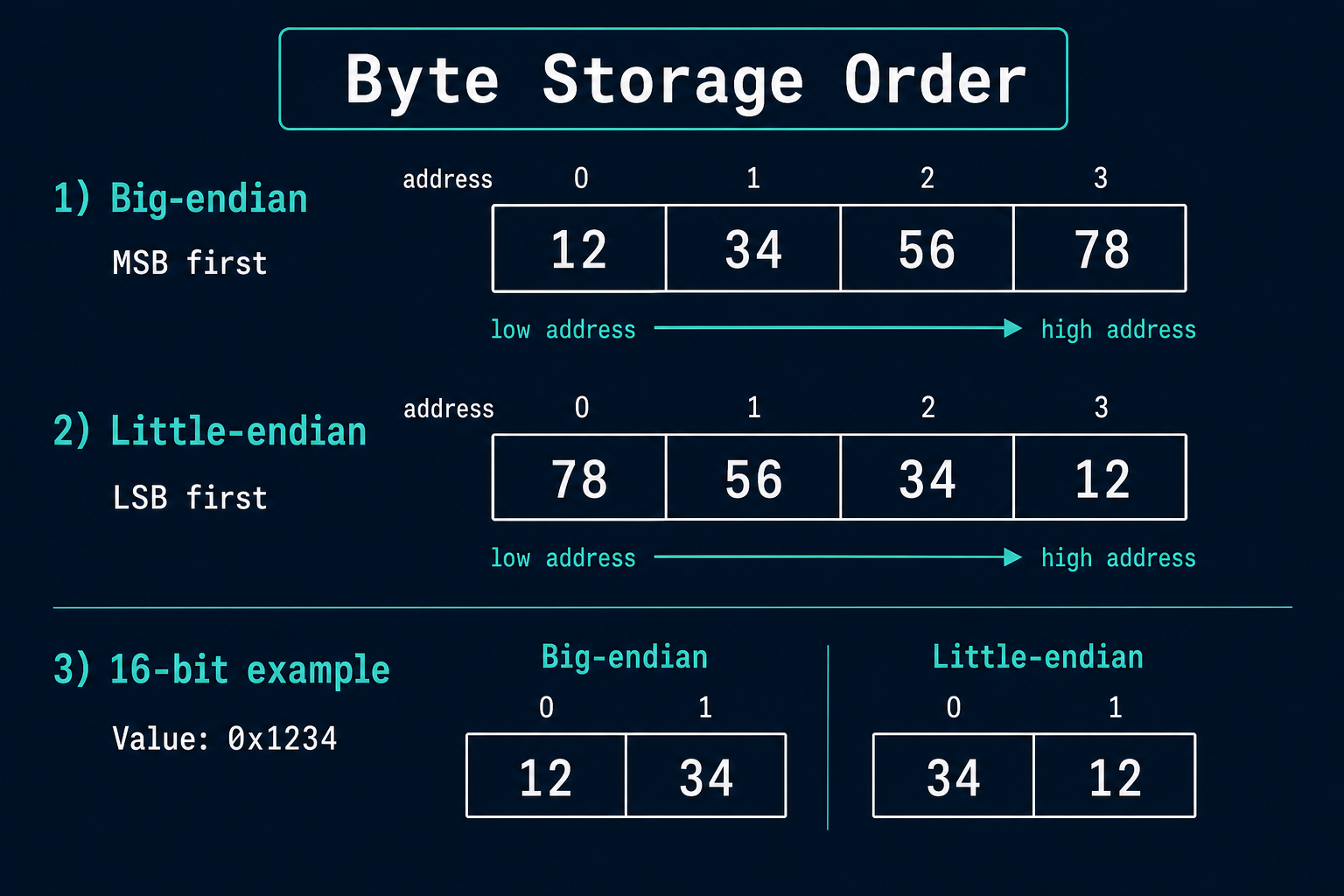
Big or little endian byte storage order
Multi-byte integers occupy several memory locations. Values here are signed (two’s complement). Big-endian stores the most significant byte at the lowest address; little-endian stores the least significant byte first. Hexadecimal shows the stored bit pattern; storage order shows how those bytes appear in memory from low address to high.
16-bit signed integer
low address → high
low address → high
32-bit signed integer
low address → high
low address → high
64-bit signed integer
low address → high
low address → high