Subnet details
Enter an IPv4 address and CIDR prefix length. Network and broadcast addresses follow standard classless rules.
How IPv4 subnet calculations work
Addresses, masks, and usable hosts
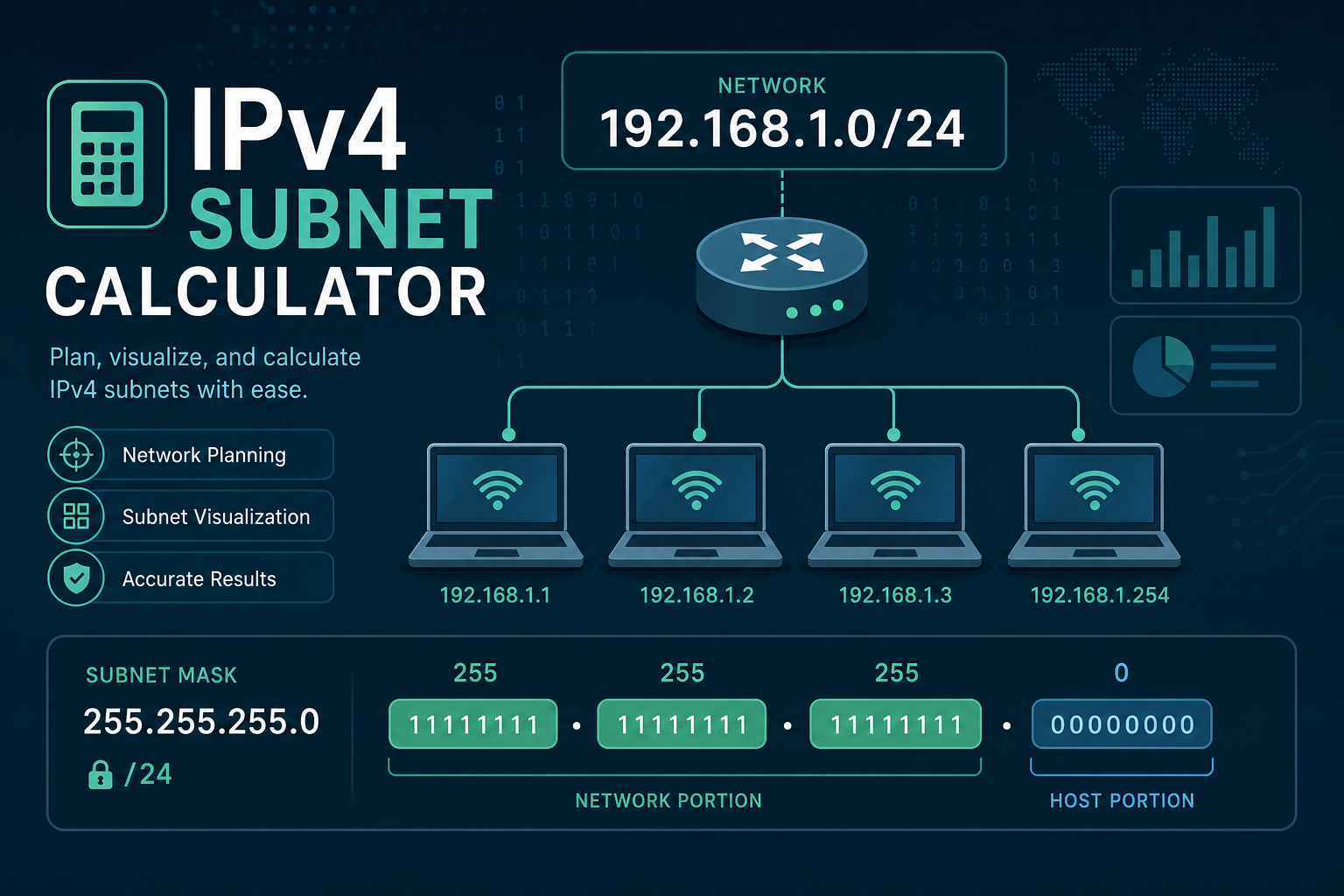
An IPv4 address is 32 bits, usually written as four decimal octets. A subnet mask or CIDR prefix length splits those bits into network and host portions. This tool computes network address, broadcast address, mask, and host counts for a prefix so planning VLANs or reading routes is less guesswork.
Worked example
192.168.1.10/24 has mask 255.255.255.0, network 192.168.1.0, broadcast 192.168.1.255, and typically 254 usable hosts (excluding network and broadcast in classic usage).
Common mistakes
- Overlapping subnets accidentally when carving a /16 into /24s.
- Forgetting that /31 and /32 have special-case uses.
- Mixing decimal masks with wrong CIDR lengths.
FAQs
- Private vs public?
- RFC1918 ranges are private; the maths here is the same either way.
- Guide?
- IPv4 subnet basics.
When this page helps
Use it when you want a transparent, browser-side calculation with the assumptions spelled out — then verify anything high-stakes against primary docs, a professional, or your own measurements. The related links below point to sibling tools and longer guides when you need more context.
Accuracy notes
Results depend entirely on the numbers you enter and the simplified model described above. Device clocks, tape measurements, market rates, and recipe conventions can all differ from a perfect textbook case. If an output looks surprising, re-check units first, then re-read the formula section.
Related: Number Bases, Bitwise Operations.
Last updated: July 2026